
This module is designed enable students to analyze concepts in the binary numbers, number base conversion, complements and codes, definition of Boolean Algebra, Boolean functions, digital logic gates, Integrated circuits, The Karnough Map method (Two–, Three– and Four-variable Maps), POS and SOP simplifications, combinational logic circuits, adders, subtractors, comparators, and code conversions, decoders and encoders, multiplexers and demultiplexers and realization of basic logic gates, and functions generation using combinational logic circuit.
MSA E-Learning
Search results: 110
Discourse Analysis- frequently known as “language use above the level of the sentence” provides students with the opportunity to study the meaningful production and interpretation of texts and talk. students get introduced to the field of Discourse Analysis in order to unpack texts for generating meaning and bind it with their study of society and culture. They will gain an advanced understanding of the concept of ‘context’ and its relevance in the process of the production of meaning. The course provides students with frameworks and tools to examine and critique texts and instances of language use that is much relevant to socio-economic and socio-cultural issues such as gender, social power and minorities, environment, health and pandemics
Category: Faculty Of Languages
Aims
- To understand the principles of DNA technology and its applications on forensic sciences.
- To clarify the terminology and the mail techniques that used in forensic and analysis.
- To be familiar with molecular biological tools and techniques used to perform DNA profiles
- database analysis following DNA forensics applications
Learning Outcomes:
- Understand and appreciate the scope of forensic biology.
- Understand and appreciate the scope, diversity and utility of a variety of DNA typing techniques.
- Perform the primary technique used in Forensic DNA analysis
- identify the equipment and prepare its use to undertake the investigation
Skills learning outcomes:
- consider the health and safety requirements and what precautions need to be taken
- identify the area of the scene, mark it out and protect it to preserve the scene
- handle, package and record evidence
- preserve evidence ensuring its integrity and preventing contamination or degradation
- record relevant information accurately and comprehensively use visual examination and measurement for comparative analysis
- Perform post-PCR Processing
Category: Faculty Of Biotechnology
The first course in design theory aims to let the student Understand the design process, with emphasis on the development of a visual language; study of historic, scientific, technological, economic, and cultural factors influencing design in our physical environment.
Category: * Foundation Courses - 5 Majors
Category: Economics
This module aims to further enhance and complement the students’ knowledge and skills in basic econometrics and to tackle further problems encountered in estimating regression models. The module aims thus to prepare students with the necessary knowledge and skills needed to start their graduate econometrics module. All econometric models built are directly or indirectly linked to several Sustainable Development Goals (SDG) aiming to narrowing the gap economic theory and empirical applications through testing real live data. It is related to reducing poverty, improving health, climate action, sustainable and responsible production and consumption behavior , and enhancement of competitiveness , industries and innovation.
Category: Economics
This module is designed to explore the existing and challenging subjects of economic development. The course focuses on the basic concepts of economic development, the development gap, measurement of income distribution and poverty, sources of finance and analyses some of the major development problems and policies.
Many of the United Nations 17 Sustainable Development Goals are discussed in this module especially with respect to the relative success of developing countries in achieving such goals.

Category: Economics
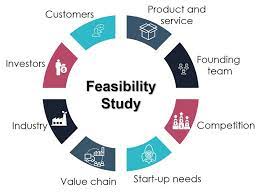
This module aims to provide students with the basic tools for feasibility study preparation including pre-feasibility study, selection of project, financial analysis, and investment appraisal. It provides a brief coverage of the cost-benefit analysis used in evaluating public projects. It allows the students to utilise what they have learned in various courses such as Accounting, Economics, Finance, Marketing and Management, in the preparation of the feasibility study of projects.
Category: Economics
Category: Economics
- This module is designed to provide students with a thorough understanding of the
fundamentals of engineering economy.
- Economic analysis in engineering management
systems.
- Time value Equivalence and cash flows. Economic evaluation of engineering
projects in the public and private sectors.
- Effect of inflation, risk and uncertainties on
economic analysis.
Category: Industrial Systems Engineering (ISE)
This course is a step-by-step process taking the students through the journey of writing an academic report, doing an analytical reading of different sources, finding the gaps and limitations in each source and providing the necessary recommendations through an academic discussion.
Category: Faculty Of Languages
This course aims to describe the characteristics of entrepreneurship & small business, and the importance of diversity in the marketplace and the workplace. It also aims to articulate the differences between the small business manager and the entrepreneur and between the main forms of ownership and franchising. Moreover, it aims to identify the components of a business plan. Furthermore, it aims to evaluate potential start-ups and suggest sources of business ideas, uses of financial records to a small business, sources of funding, laws and regulations that affect small business, and explain the process of developing a small business marketing strategy
Category: Management Information System
This module aims to cover both theory and applications ofthe theory to current policy and economic issues. Fundamental issues areaddressed such as the balance between the environmental quality that thesociety requires and related responsibilities and costs. It focuses on how environmental economic theory provides guidance to findsolutions for serious environmental problems likeglobal warming, ozone depletion, air and water pollution, etc.
Category: Economics
Classifying textile fibres, and evaluate the effect of their physical, mechanical and chemical properties on textile products, suggest proper end uses of the fibres considering their favourable and unfavourable properties, the student would recognize common fibre, yarn and fabric types and develop an ability to match fabrics to their specifications.
Category: Fashion Design Department
|
This module is designed to provide students with an understanding of the concepts of thermodynamics and its applications to real thermal processes. The first law of thermodynamics. Working fluids. Reversible and irreversible processes. Second law of thermodynamics. Heat engines and refrigerators, carnot cycle. Modes of heat transfer, steady heat conduction, Newton’s law of cooling. Composite wall and electrical analog, heat flow through cylinders, and a spheres, Forced and natural convection. Heat exchangers
|
Category: Mechatronics Systems Engineering (MSE)
Governmental accounting is an umbrella term which refers to the various accounting systems used by various public sector entities.
The governmental accounting system has a different focus for measuring accounting than private sector accounting. Rather than measuring the flow of economic resources, governmental accounting measures the flow of financial resources.
Category: Accounting
This unit aims to enhance the students’ knowledge and skills needed to conduct a research paper of substantial depth and length under the supervision of a faculty member, whether it is theoretical based on literature review and analysis, or empirical based on econometric, statistical or mathematical analysis.
Topics selected by students for their graduation projects are closely linked to sustainable development goals, especially SDG8 related to decent work and economic growth, as they create models where they try to determine the main catalysts for growth in certain countries or regions. Students also choose topics related to reducing poverty (SDG1) or inequality (SDG10), quality education (SDG4) gender equality (SDG5) and many other SDGs.
Category: Economics
This unit aims to enhance the students’ knowledge and skills needed to conduct a research paper of substantial depth and length under the supervision of a faculty member, whether it is theoretical based on literature review and analysis, or empirical based on econometric, statistical or mathematical analysis.
Topics selected by students for their graduation projects are closely linked to sustainable development goals, especially SDG8 related to decent work and economic growth, as they create models where they try to determine the main catalysts for growth in certain countries or regions. Students also choose topics related to reducing poverty (SDG1) or inequality (SDG10), quality education (SDG4) gender equality (SDG5) and many other SDGs.Category: Economics
This course is a studio based course exploring, understanding and experimenting the creative relationship between different aspects of graphic design. Concept, practice, communication and outcome are to be explored with reference to the diversity of practice in graphic design. Students work on two major projects: the first integrates design and its historical context, while the second focuses on the work of an important 20th-century designer.
This course focuses on introducing graphic design processes. Elements of creative graphic design are to be explored with a clear understanding of visual data. In addition, this course concentrates on experimenting with different media, materials and processes of graphic design, it also introduces graphic design technique and production processes.
Category: Graphics and Media Arts Department
- Define types of data, simple model of computer, data storage, data processing, integrated circuits (ICs), and registers.
- Recognize number systems and coding schemas.
- Identify the functions of OS, basics of programming languages, and computer software categories.
- Apply computer skills on mini-projects serving different engineering departments.
- Explain the types of computer networks and data communication.
- Organize the information security, Malicious Software, and solutions.
- Have a view on the concepts and the future of AI & IoT.

Category: General Systems Engineering (GSE)
*Recognize the importance of the theory of differential equations and understand the relation between differential equations and various fields of sciences.
* Formulate the essential facts, concepts, principles and theories related to
the theory of differential equations.
* Use analytic methods for solving ordinary differentia equations which appear in engineering applications.
* Employ recent communication and information technologies, models and tools effectively in different numerical methods..
Category: General Systems Engineering (GSE)