

Category: Faculty Of Dentistry
Lean Manufacturing is about creating value. The Lean process starts with creating value for the ultimate customer which requires providing the right product at the right time for the specified price. While all manufacturing attempts to do this, what makes Lean Manufacturing distinct is the relentless pursuit and elimination of waste. Students will learn the concepts and tools of Lean which include types of waste, visual management, value stream analysis, flow, Just in Time, pull, and Kaizen.
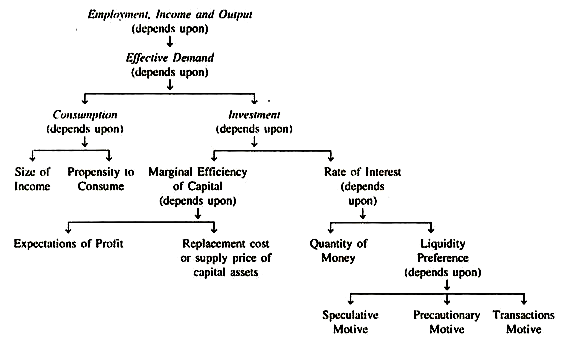
Macroeconomics is concerned with the understanding of aggregate phenomena such as economic growth, business cycles, unemployment, inflation, and international trade among others. ... These topics are of particular relevance for the development and evaluation of economic policy.
This module aims to provide the student with a comprehensive guide to the revolutionary management support system technologies, and how they can be used for better decision making. The module presents the sue of modelling and simulation in the decision process then provides an in depth survey of the use of current IT technologies in DSS such as data warehousing, data mining, OLAP, knowledge management, artificial intelligence and expert system.
This module is designed to provide students with the fundamental of some non- conventional processes such as Chemical Machining (CM), Electrochemical Machining (ECM), Electric Discharge Machining (EDM), Laser Beam Machining (LBM), Electron Beam Machining (EBM), Ultrasonic Machining (USM), Abrasive Jet Machining (AJM), Hydrodynamic Machining (HDM) and Abrasive Flow Machining (AFM). Focus on the use of new tools, concepts, terminology, function and industrial applications of each process of non - conventional processes.
|
This module is designed to provide students with a thorough understanding of the fundamentals of chip - type machine processes. Cutting tools for machining and materials removal. Mechanics and Dynamics of Metal Cutting. Turning, boring and related machining processes. Drilling and related hole making processes, milling, broaching, sawing, shaping and planning, and abrasive machine processes. Creating processes Card, Operation Step card and Operation Sketch. Perform various machining operations, selection of tools, calculation of feed and speed, and machining time.
|
Course Description
This course explores economic principles as they apply to media industries, with a focus on Egypt and the MENA region while integrating global case studies. Students will examine how economic forces shape media ownership, digital transformation, journalism, advertising, and labour markets. Key topics include media monopolies, platform economics, public goods, pricing strategies, game theory in media competition, and regulatory policies.
Course Objectives
By the end of the course, students will be able to:
Apply economic principles to analyze the media industry.
Compare global and regional media market structures and business models.
Examine pricing strategies, revenue models, and consumer behavior in media.
Analyze the impact of digital transformation on labor markets and media production.
Evaluate media regulations and policies in Egypt, MENA, and globally.
Understand economic decision-making using game theory, behavioral economics, and industrial organization.
Biochemical reactions in health and disease are a perquisite to identify and manage health problems. The principal aim of this course is to provide an understanding of the molecular mechanisms fundamental to the life processes. An understanding of the way in which reactions take place at the cellular level will then provide a background against which the changes due to disease can be viewed. -------------------------------------------------------------------(((((((((((((Assessment Pattern )))))))))))) :: *In Course Tests and Quizzes: 10% *Midterm Exam : 10% *Practical Exam : 20% *Oral Exam: 20% *End of Semester Written Exam:40% #Total 100%
This course enables the student to understand how micro-organisms live and infect human, how
human respond to these infections in order to preserve health. The first part of the course presents
basic microbial structure, function, Microbial Genetics, Principles of chemotherapy and drug resistance,
The different methods of sterilization and disinfection in clinics .The second part presents mammalian
host defences and the molecular basis of immunity.
This course enables the student to understand how micro-organisms live and infect humans, and how
humans respond to these infections in order to preserve health. This course presents basic microbial
structure, function and genetics and principles of chemotherapy and drug resistance.
This unit focuses on English teaching methodology. It acquaints students with terms normally used in this area of study e.g. approach, method and technique. It gives them a brief account of the different approaches highlighting the main similarities and differences between them.
The unit examines the following points:
a) Knowledge and skills an English language teacher needs to possess.
b) Similarities and differences between different teaching contexts
c) Similarities and differences between the different teaching approaches.
d) Principles of English language teaching.
How to teach both listening and speaking.This unit discusses the different approaches to, methods and techniques of teaching reading, writing, grammar and vocabulary in the EFL classrooms. It explores the varied techniques of error correction and major differences between young & adult EFL learners.
This module is designed to enable students to focus on the analysis of the Microwave Systems, Waves on an Ideal Transmission Line, Terminated Transmission Lines: Resistive Load, Terminated Transmission Lines: Smith Chart, Impedance Matching, Single-Stub Matching, Quarter-Wave Transformer, Rectangular Waveguides, Circular Waveguides, and Cavity Resonators.
This module aims to covers the factors necessary for successful management of information systems development or enhancement projects. Both technical and behavioral aspects of project management are applied within the context of an information systems development project. The module strikes a balance between both the mechanics of project management and the human factors involved. Software tools for project tracking and monitoring are utilized through out the module.
The purpose of Modern Drama Course is to give an overview and understanding of modern drama from Ibsen to the present.
This course helps students to consider and evaluate a selection of twentieth century fiction in English. It aims essentially to develop a critical appreciation of most outstanding figures in the field of the twentieth century English novel, in relation to their contexts. The course will also focus on some wider questions about the novel as a means of representing its contemporary social and political history.
This course is to emphasize the usefulness of molecular and genetic tools in the diagnosis of diseases. The course explains the impact of genetic polymorphism in altering the response to therapeutic drugs. The course also highlights the role of personalized medicine in tailoring therapeutic dosage to patients individually.
This course aims at introducing the students to detailed description of the molecular basis of cancer and the mechanisms which lead to the initiation and progression of cancer as a serious disease. To this end, hall marks of cancer and the underlying mechanisms are covered in this course. Additionally, the course aims to link this information to how specific cancer drugs are designed based on the important and key alterations studied throughout the course.
Course Specification:
|
Programme Code(s) |
BSc. Hons. Biotechnology (P11493) |
|||||||
|
Host Faculty |
Faculty of Biotechnology |
|||||||
|
Host Department |
Biotechnology |
|||||||
|
Code |
BT309b |
|||||||
|
Title |
Molecular drug design |
|||||||
|
Leader |
Dr. Amr Ageez |
|||||||
|
Level |
4 |
|
5 |
ü |
6 |
|
7 |
|
|
Credit |
4 |
|||||||
|
Pre-requisites |
GEN304b |
|||||||
Aims
Learning Outcomes:
The course outcomes for what students should know include:
This module aims to examine the structure of the banking system, the financial system and the components and functions of money. It also aims to assess methods of determination of interest rates and exchange rates. It also analyses the role of central banks, the process of multiple deposit creation and evaluates the theoretical and empirical aspects of the role of monetary policy in macroeconomic stabilization and economic growth.
This module is linked to the sustainable development goals, especially SDG8 related to decent work and economic growth, as the module teaches students how policy makers can use fiscal and monetary policies in enhancing economic growth.

