THTR455: History of Styles unit is incredibly important to the joy and self-knowledge of nations. It is actually included in the SDGs 4, 8,10, 11 and 16. In this unit student learn to trace back the applications of different SDGs through history and how we can imitate or develop the good practices. For example, they acquire the knowledge of the direct relationship between economy and the power of civilization that is probably reflected in the architecture, furniture and costumes of certain periods. As well as, student can track down ho ancient people tried to solve environmental problems back then like sustainability in the hanging gardens of the new-old Babylon that were in fact the first example of green and blue roof technology employed in urban planning. Studying this unit allows students to be aware of how Inequalities and injustice can affect buildings, costumes and furniture such as in the “Sumptuariae Leges” of ancient Rome were various laws passed to prevent inordinate expense in banquets and dress, such as the use of expensive Tyrian purple dye. In the early years of the Empire, men were forbidden to wear silk. Furthermore, they grasp how wars, conquests and revolutions clearly affected various design styles along historical periods. Why THTR455: History of Styles unit is important for the Global Goals? is associated with Goal 4 – Quality Education, As one of its targets is (4.7) "By 2030, ensure that all learners acquire the knowledge and skills needed to promote sustainable development, including, among others, through education for sustainable development and sustainable lifestyles, human rights, gender equality, promotion of a culture of peace and non-violence, global citizenship and appreciation of cultural diversity and of culture's contribution to sustainable development. Goal 8 – Decent Work and Economic Growth, Since the official wording for Target 8.2 is: "Achieve higher levels of economic productivity through diversification, technological upgrading and innovation, including through a focus on high-value added and labor-intensive sectors. Goal 10 – Promote universal social, economic and political inclusion The target of this goal is "By 2030, empower and promote the social, economic and political inclusion of all, irrespective of age, sex, disability, race, ethnicity, origin, religion or economic or other status" Goal 11 – Sustainable Cities and Communities Target 11.4 is to "Strengthen efforts to protect and safeguard the world's cultural and natural heritage." It has one indicator: Indicator 11.4.1 is the "Total per capita expenditure on the preservation, protection and conservation of all cultural and natural heritage, by the source of funding (public, private), type of heritage (cultural, natural) and level of government (national, regional, and local/municipal)". The full text of Target 11.a is "Support positive economic, social and environmental links between urban, peri-urban and rural areas by strengthening national and regional development planning" Goal 16 – Peace, Justice and Strong Institutions The full text of Target 16.b: "Promote and enforce non-discriminatory laws and policies for sustainable development."
MSA E-Learning
Search results: 110
Overall Aims of the Course
This course is intended to be a pre-university course. It has been designed for the sake of helping the students -who did not pass the ELAT Exam (category1), improve their English in terms of language systems and skills.
Intended Learning Outcomes
By the end of this course, the students should be able to:
Knowledge and Understanding
- Understand oral and written texts on different topics in English
- Recognize different rules of grammar and pronunciation for accurate oral and written production
- Identify different language functions
- Reproduce information at word, sentence and text levels
Intellectual Skills
- Listen to spoken language of different types for the sake of fulfilling simple tasks
- Present basic information in a clear and accurate way
- Express feelings and opinions on familiar topics using appropriate language functions
- Engage in simple exchanges with a partner(s)
- Read different types of texts using suitable strategies in relation to general understanding as well as text lexical and grammatical structure (parts of speech, clauses and phrases, basic sentence types, as well as sentence expansion by subordination and coordination).
- Write different types of texts (online advice, advert/notice, notes and messages, a true story, email, a description, a CV and a paragraph) with an insistence on sentence modes (SVO, SVC, SV (M), ACTIVE vs. Passive..).
Practical Skills
- Classify relationships in terms of omissions, parts, organization and structure for the sake of comprehending English at word, sentence and text level through active listening and reading
- Communicate their ideas and opinions efficiently in oral/ written modes
General and Transferable Skills
- Apply the concepts and skills gained in this course to increase their awareness of English as a language whilst using it in their future academic studies.
This module discusses international trade related theories and policies and their analysis for international trade contexts and it contributes to how can trade deliver key sustainable Development Goals to include and not to be limited to:-
SDG1: Inclusive trade policies will reduce poverty rate
SDG 2: How can trade subsidies cause distortions in agricultural markets and hence affect food sustainability and security
SDG3: How could WHOs TRIPs agreement ensure access to medicine and vaccines.
SDG5: The role of trade in creating jobs to women and unleashing better and more equitable opportunities.
SDG8: The role of trade can lead to inclusive growth and enhance the nations' income generation sources and capability
SDG 9: Improving the competitiveness and preparedness of industries and innovation through specialization and trading .
This unit reinforces knowledge, concepts and skills developed in Interior Design Studio IV and in Working Details. It focuses on problem solving for hospitality and recreational areas. The main theme to follow in design is “SUSTAINABILITY and ECO-FRIENDLY DESIGN”. Appropriate research methods and programming of stakeholders such as client and operator’s requirements are introduced, as well as techniques of diagramming space to provide proper circulation and activity relationships. Design concept, image, colour and finishes, graphics, building codes, and barrier-free design compliance are emphasized. Architecture and (FF & E)* design details are within the projects’ requirements.

This module aims at providing a basic introduction to macroeconomic principles and their application to both theoretical and real world situations. It also intends to identify appropriate techniques to analyse macroeconomic equilibrium and develop analytical skills using the different mathematical and graphical methods. Finally, the module intends to give students the ability to communicate and report on findings, particularly through essays, presentations and exercises.
This Course aims to provide students with the fundamental concepts of labor economics, labor supply and demand, labor quality, wage determination, choices for investing in human capital and the influence of government and labor unions on these choices. It also explores the basics on which labor policies are made under the influence of economic forces and to critically evaluate these policies with regard to wages, employment and mobility, and is related to SDG No. 8.
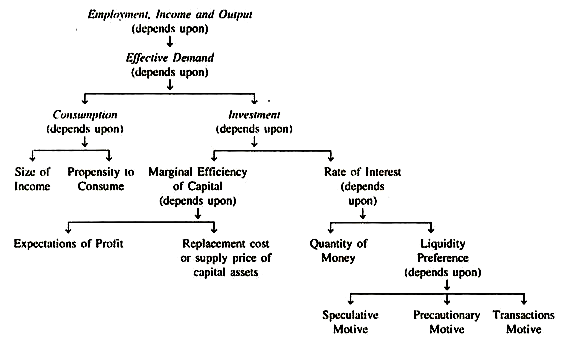
The module will begin by reviewing theso-called modern approach to aggregate demand and aggregate supply. Thisentails incorporating into the classical approach to aggregate supply andaggregate demand insights from Keynesian economics. This will serve as a baseto discuss the role of macroeconomic policy in controlling fluctuations inoutput and employment. In particular, the module will focus on introducing themodern theory of expectations and economic dynamics and on using this approachto analyse long run fluctuations. The module also aims at s tudying therole of macroeconomic policy on long run fluctuations .
Macroeconomics is concerned with the understanding of aggregate phenomena such as economic growth, business cycles, unemployment, inflation, and international trade among others. ... These topics are of particular relevance for the development and evaluation of economic policy.
This course enables the student to understand the importance of marines life and marines natural products, describe and deal with: the composition and bioactivity of sea water, the marine ecosystem and classification of major phyla of marine organisms; the importance of marine drugs as leads for novel pharmaceuticals; the chemistry, bioactivity and/ or toxicity of metabolites derived from marine organisms (specially algae, invertebrates and microorganisms); as well as, the techniques adopted for drug-development from marine resources.
Course Description
This course explores economic principles as they apply to media industries, with a focus on Egypt and the MENA region while integrating global case studies. Students will examine how economic forces shape media ownership, digital transformation, journalism, advertising, and labour markets. Key topics include media monopolies, platform economics, public goods, pricing strategies, game theory in media competition, and regulatory policies.
Course Objectives
By the end of the course, students will be able to:
Apply economic principles to analyze the media industry.
Compare global and regional media market structures and business models.
Examine pricing strategies, revenue models, and consumer behavior in media.
Analyze the impact of digital transformation on labor markets and media production.
Evaluate media regulations and policies in Egypt, MENA, and globally.
Understand economic decision-making using game theory, behavioral economics, and industrial organization.
This course enables the student to understand how micro-organisms live and infect human, how
human respond to these infections in order to preserve health. The first part of the course presents
basic microbial structure, function, Microbial Genetics, Principles of chemotherapy and drug resistance,
The different methods of sterilization and disinfection in clinics .The second part presents mammalian
host defences and the molecular basis of immunity.

This module has two aims; first, to appraise the patterns of economic development and the changing structures of the economies of the Middle East and North Africa region after World War II; second, to analyse the internal and external determinants of economic change in the Middle East and North Africa and examine their implications for development.