
Category: Masters Course
MSA E-Learning
Search results: 198
This module aims at developing student’s skills with theoretical and practical knowledge on diagnosing the infectious diseases using conventional microbiological, serological and molecular-based diagnostic methods. The module also studies the possible causative agents and the diagnosis of different infectious diseases in the human body system-based manner. The student will learn procedural skills considered in a diagnostic microbiology laboratory including collection, quality control, quality assurance, safety, setup, identification, susceptibility testing and reporting results.
Category: Microbiology & Immunology Department
This module is designed enable students to analyze concepts in the binary numbers, number base conversion, complements and codes, definition of Boolean Algebra, Boolean functions, digital logic gates, Integrated circuits, The Karnough Map method (Two–, Three– and Four-variable Maps), POS and SOP simplifications, combinational logic circuits, adders, subtractors, comparators, and code conversions, decoders and encoders, multiplexers and demultiplexers and realization of basic logic gates, and functions generation using combinational logic circuit.
Learning Outcomes: on successful completion of this course a student will be able to:
A. Knowledge:
1- Explain fundamentals of Boolean algebra and building blocks of logic circuits. (K1)
2- Describe common designs of combinational and sequential circuits. (K3)
B. Cognitive Skills:
1- Demonstrate digital logic circuit implementation. (I1)
2- Differentiate between different logic designs. (I2)
C. Professional Skills:
Build logic circuits from common logic gates and components. (P2)
D. General Skills:
Work effectively as a group member. (T3)
Category: Faculty Of Computer Science
Discourse Analysis- frequently known as “language use above the level of the sentence” provides students with the opportunity to study the meaningful production and interpretation of texts and talk. students get introduced to the field of Discourse Analysis in order to unpack texts for generating meaning and bind it with their study of society and culture. They will gain an advanced understanding of the concept of ‘context’ and its relevance in the process of the production of meaning. The course provides students with frameworks and tools to examine and critique texts and instances of language use that is much relevant to socio-economic and socio-cultural issues such as gender, social power and minorities, environment, health and pandemics
Category: Faculty Of Languages
Aims
- To understand the principles of DNA technology and its applications on forensic sciences.
- To clarify the terminology and the mail techniques that used in forensic and analysis.
- To be familiar with molecular biological tools and techniques used to perform DNA profiles
- database analysis following DNA forensics applications
Learning Outcomes:
- Understand and appreciate the scope of forensic biology.
- Understand and appreciate the scope, diversity and utility of a variety of DNA typing techniques.
- Perform the primary technique used in Forensic DNA analysis
- identify the equipment and prepare its use to undertake the investigation
Skills learning outcomes:
- consider the health and safety requirements and what precautions need to be taken
- identify the area of the scene, mark it out and protect it to preserve the scene
- handle, package and record evidence
- preserve evidence ensuring its integrity and preventing contamination or degradation
- record relevant information accurately and comprehensively use visual examination and measurement for comparative analysis
- Perform post-PCR Processing
Category: Faculty Of Biotechnology
The first course in design theory aims to let the student Understand the design process, with emphasis on the development of a visual language; study of historic, scientific, technological, economic, and cultural factors influencing design in our physical environment.
Category: * Foundation Courses - 5 Majors
This module aims to further enhance and complement the students’ knowledge and skills in basic econometrics and to tackle further problems encountered in estimating regression models. The module aims thus to prepare students with the necessary knowledge and skills needed to start their graduate econometrics module. All econometric models built are directly or indirectly linked to several Sustainable Development Goals (SDG) aiming to narrowing the gap economic theory and empirical applications through testing real live data. It is related to reducing poverty, improving health, climate action, sustainable and responsible production and consumption behavior , and enhancement of competitiveness , industries and innovation.
Category: Economics
This module is designed to explore the existing and challenging subjects of economic development. The course focuses on the basic concepts of economic development, the development gap, measurement of income distribution and poverty, sources of finance and analyses some of the major development problems and policies.
Many of the United Nations 17 Sustainable Development Goals are discussed in this module especially with respect to the relative success of developing countries in achieving such goals.

Category: Economics
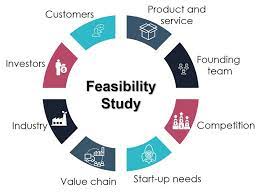
This module aims to provide students with the basic tools for feasibility study preparation including pre-feasibility study, selection of project, financial analysis, and investment appraisal. It provides a brief coverage of the cost-benefit analysis used in evaluating public projects. It allows the students to utilise what they have learned in various courses such as Accounting, Economics, Finance, Marketing and Management, in the preparation of the feasibility study of projects.
Category: Economics
This module is designed to provide students with:
1- Introductory topics in the electric circuits that use DC voltages and DC currents.
2- Elements of DC circuits, basic laws and different methods of electric circuit analysis.
3- Analysis, design, and development of
several examples of DC circuits.
This module is designed to enable students to understand, design, and analyze electronic circuits that contain Bipolar Junction Transistors(BJT`s) and Field Effect Transistors (FET`s). ItincludestheoperationandanalysisofBJTandFETamplifiersandstudythe frequency response of both. It provides analysis of multistage amplifiers and current sources. It also provides considerable understanding and confidence in Engineering Electronics and develops the intellectual and practical skills necessary for Electronics Engineering area.
This
module designed to enable students to understand concepts in the electronic amplifier
theory, differential amplifiers, power amplifiers, tuned voltage amplifiers,
feedback amplifiers, sinusoidal oscillators, and operational amplifiers. It
also provides considerable understanding and confidence in Engineering
Electronics and develops the intellectual and practical skills
necessary for Electronics Engineering area.
This module is designed to enable students to focus on the design and analysis of the active circuits, active filters, multiple feedback operational amplifiers, and multiple feedback filters. It also provides considerable understanding and confidence in Engineering Electronics and develops the intellectual and practical skills necessary for Electronics Engineering area.
This course aims to familiarize the student with the clinical phase of treatment with the theoretical topics and correlate with the practical sessions through introducing management pf multiple root canals.
Category: Endodontics (Clinical)
This module is designed to enable students understand the concept of energy conversion, structure and function of power stations, and environmental effects of energy resources. In addition, the principles of magnetic circuits, excitation in single phase transformer, voltage regulation, losses and efficiency, auto-transformation are introduced. It also presents the principles of electromechanical energy conversion, DC generators, DC motors, three phase transformers, polarity, and standard terminal marking, parallel operation, and all-day efficiency. It also addresses the principles of AC machines, Synchronous machine, electro motive force (emf) equivalent circuit, power equation, and distribution of electric power.
|
Words and grammar are the basic building blocks of language. The aim of this course is to introduce contemporary morphological theory and practice. It also introduces the basics of modern syntactic analysis drawing ideas from different syntactic frameworks |
Category: Faculty Of Languages
Category: Mechatronics Systems Engineering (MSE)


The course is designed to provide the students with basic theoretical concepts of fixed prosthodontics. Biomechanical principles of tooth reduction for full coverage extracoronal restorations are taught regarding all ceramic and porcelain fused to metal restorations. This proceeds in addition to the application of these concepts on anatomic ivorine teeth mounted in models simulating teeth in the oral cavity. Furthermore, the students are trained on the various laboratory steps needed for the laboratory fabrication of Jacket and veneered restorations. This course fulfills the SDS3 which is good health and well being.
Category: Fixed Prothodontics
This course describes the drugs, chemicals (heavy metals) and plants including their natural products that constitute health hazards, or intended for criminal uses to produce, abortion, loss of mental control, hallucination, heart arrest. Also it includes the study of drug dependents, narcotics, analgesics psycho-energetics, euphoric Mycotoxin as a serious threat to general health and safety of community, contamination of food material with poisonous fungi.
Category: Analytical Chemistry Department